
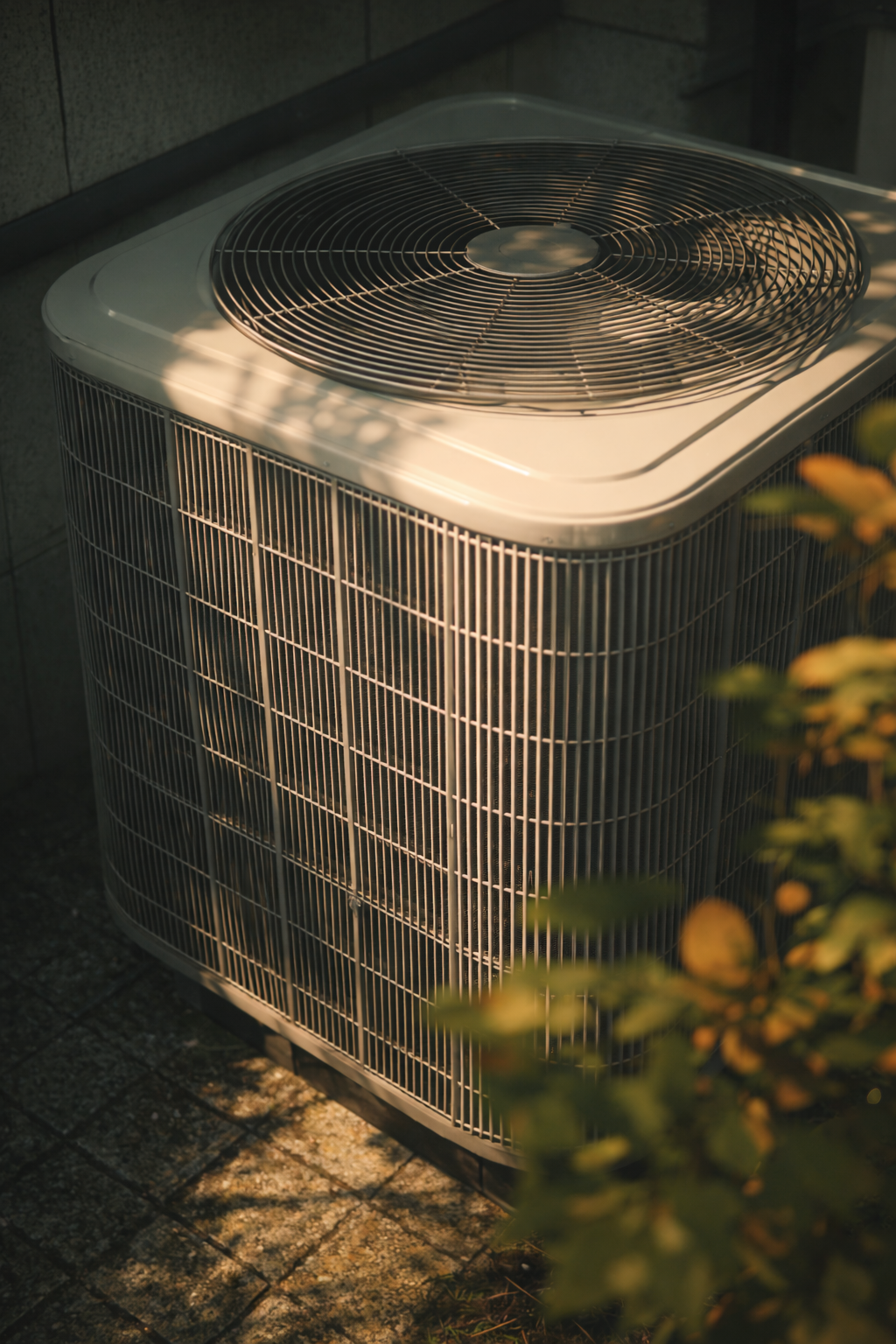
Most people replace an air conditioner twice in their life, usually in a hurry, usually in July, right after the old one quit. That is the worst possible moment to make a decision you will live with for the next fifteen years.
Here is what actually matters when you are choosing a new cooling system for a home in Raleigh or the surrounding Triangle, roughly in the order it matters.
Sizing Comes Before Brand
The most common mistake in residential cooling is installing a system that is too big. It sounds backwards. Bigger should mean cooler. What actually happens is that an oversized system drops the air to the thermostat setting very fast, shuts off, then starts again a few minutes later.
That short cycle is a particular problem in North Carolina, because pulling humidity out of the air takes runtime. An air conditioner only removes moisture while it is running. A system that blasts cold for eight minutes and shuts down never runs long enough to dry the house out. You end up sitting at 72 degrees and still feeling clammy, reaching for a lower setting that does not address the real problem.
Correct sizing comes from a load calculation, usually called a Manual J. It accounts for square footage, insulation, window area and which direction those windows face, ceiling height, and how leaky the house is. A contractor who sizes your system by reading the sticker on the old one is guessing, and inheriting whatever mistake the last installer made.
Central AC, Heat Pump, or Mini-Split
Three options make sense for most Triangle homes, and the right one usually depends on how you heat.
- Straight central air conditioning. Cools only. This makes sense if you have a gas furnace you are keeping and you are replacing just the cooling side.
- Heat pump. The same equipment cools in summer and heats in winter by moving heat rather than burning fuel. In our climate a heat pump handles the large majority of the heating season on its own, which is why it has become the default for all-electric homes here. We compared the two in more detail in heat pump vs. furnace for North Carolina homes.
- Ductless mini-split. Worth considering for additions, bonus rooms over garages, converted attics, and any space your ductwork never served properly. Also the answer for homes with no ducts at all.
If one room in your house has always been ten degrees off from the rest, replacing the central system will usually not fix it. That is a duct problem or a load problem, and a mini-split or a duct repair is the honest answer.
What SEER2 Actually Buys You
SEER2 is the efficiency rating on cooling equipment. Higher is more efficient. The rating was updated a few years ago to test units under conditions closer to a real duct system, so SEER2 numbers read slightly lower than the old SEER numbers for the same equipment. Do not let anyone use that to tell you a unit got worse.
The practical point is that efficiency gains are real but they flatten out. Moving from an old, barely functioning unit to a current baseline system is a large jump. Moving from a good system to a premium one is a much smaller jump, and it takes years of summers to pay back the difference. In a house with leaky ducts or thin attic insulation, the high-efficiency unit will underperform its rating anyway, and that money would have done more good spent on the ducts.
Single-Stage, Two-Stage, and Variable-Speed
This is the part that affects how the house actually feels, and it gets less attention than the efficiency number.
- Single-stage runs at full blast or not at all. It is the least expensive and the least comfortable, with bigger temperature swings and less dehumidification.
- Two-stage has a low setting it can hold for longer stretches. Longer runtime at lower output means steadier temperatures and noticeably drier air.
- Variable-speed modulates continuously and runs at low output most of the time. It is the quietest, the most even, and by far the best at humidity. It is also the most expensive to buy and to repair.
In a humid climate, staging often does more for day-to-day comfort than an extra point of efficiency does for your bill.
The Parts of the Quote That Matter More Than the Equipment
Two contractors can quote the identical model number and deliver systems that perform completely differently. What separates them:
- Ductwork. If the ducts are undersized, disconnected in the crawlspace, or leaking into the attic, a new condenser will not save you. Ask whether the quote includes any duct evaluation or repair.
- Refrigerant charge and airflow setup. A unit charged by feel instead of by measurement can lose a meaningful share of its rated capacity on day one.
- Line set and pad work. Reusing an old, contaminated line set with new equipment is a shortcut that shows up as a failure later.
- Warranty registration. Most manufacturer warranties require registration within a set window after installation. If nobody registers it, you silently drop to a much shorter term.
- Permits and inspection. Replacement work in this area is permitted work. A quote that skips it is cheaper for a reason.
Questions Worth Asking Any Contractor
- Did you run a load calculation, and can I see it?
- What did you find when you looked at my ductwork?
- What exactly is included, and what would be an extra charge once you open things up?
- Who registers the warranty, and when?
- What does the labor warranty cover, and for how long?
Good answers to those five questions tell you more than any brochure will.
The Short Version
Get the sizing right, spend on installation quality and ductwork before you spend on the efficiency rating, and pick staging based on how humid your house feels rather than on the badge. A correctly sized mid-tier system installed well will outperform a premium system installed carelessly every single summer.
If you are weighing a replacement, we will do the load calculation, look at the ducts, and give you options with the tradeoffs spelled out. Call or text (919) 219-9810, or read more about AC replacement and installation.