
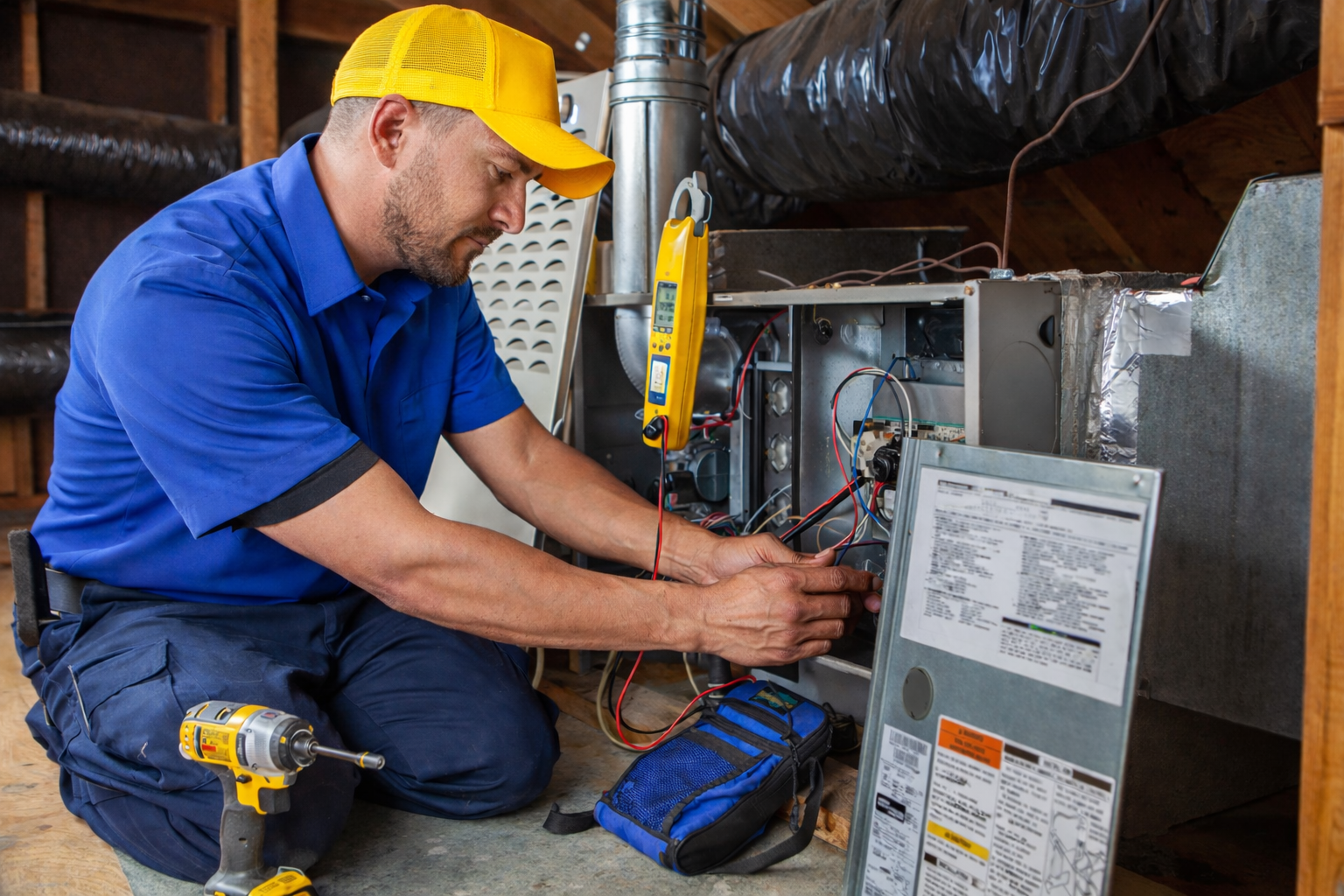
If you’re replacing a heating system in central North Carolina, the choice usually comes down to a heat pump or a furnace. Both will keep a house warm. They just go about it differently, and that difference matters more in our climate than it would further north.
Here’s how the two compare on how they work, what they cost to run, how they handle a genuinely cold night, and which one tends to make sense for homes around Raleigh and the Triangle.
How a Heat Pump Differs From a Furnace
A furnace makes heat. It burns gas or uses electric resistance to create warmth, then blows it through your ducts. A heat pump doesn’t make heat — it moves it, pulling warmth from the outside air and bringing it indoors. In summer it reverses and does the same thing in the other direction, which is why a heat pump is also your air conditioner.
That single difference drives almost everything else on this list.
Why Heat Pumps Are Common in North Carolina
Moving heat takes less energy than creating it, so a heat pump generally runs more efficiently than electric resistance heating. The catch is that heat pumps lose some capacity as outdoor temperatures drop — which is a real problem in Minnesota and much less of one here. Our winters spend most of their hours in the range where a heat pump works well, and the same unit handles the long cooling season. For a lot of Triangle homes, one system covering both jobs is simply the practical answer.
Where a Furnace Still Makes Sense
Furnaces haven’t gone anywhere, and there are good reasons to choose one. If your home already has gas service and existing gas lines, a furnace can be straightforward to replace. Furnaces also produce noticeably hotter air at the vents, which some people strongly prefer. And in a house with insulation or ductwork that struggles, the higher supply temperature can be the difference between comfortable and not. If you’re weighing a furnace installation, those are the factors worth talking through with a technician who has actually seen your setup.
What Is Auxiliary Heat?
This is where most heat pump confusion starts. When it gets cold enough that the heat pump can’t keep up on its own, a backup heat source kicks in — usually electric resistance strips, sometimes a gas furnace in what’s called a dual-fuel system. That’s auxiliary heat, and seeing it turn on during a cold snap is normal. Seeing it run constantly in mild weather is not, and usually means something needs heating repair.
Comfort Differences You’ll Actually Notice
Air from a heat pump comes out cooler than air from a furnace — often around body temperature, which can feel drafty even while the room is warming correctly. Heat pumps also tend to run longer, steadier cycles instead of short blasts. Some people find that more even and comfortable; others miss the furnace’s obvious rush of hot air. Neither reaction is wrong, but it’s worth knowing before you switch types.
So Which One Should You Choose?
If you don’t have gas service, a heat pump is usually the clear answer. If you do have gas and you value the hotter supply air, a furnace or a dual-fuel setup deserves a look. Beyond that, the honest answer depends on your ductwork, insulation, and how your particular house holds temperature — which is why this is a conversation rather than a chart. Our heat pump services team can walk your system and tell you what actually fits.
Cost matters too. If the number is the sticking point, financing is available for qualifying customers on new system installations.
Frequently Asked Questions
Do heat pumps work when it’s below freezing?
Yes. Modern heat pumps keep producing heat well below freezing, though capacity drops as it gets colder and auxiliary heat may assist. In this part of North Carolina, temperatures spend relatively few hours low enough for that to be a significant factor.
Why is my heat pump blowing cool air?
Two common explanations. During a defrost cycle the system briefly reverses and can blow cooler air, which is normal and short. If it’s persistent, that’s a different story and worth having checked.
Is a heat pump cheaper to run than a furnace?
Often, but it depends on local gas and electric rates, the age and efficiency of both systems, and how your home is built. Anyone who quotes you a guaranteed savings figure without looking at your house is guessing.
Can I replace just the outdoor unit?
Sometimes, but matching a new outdoor unit to an older indoor coil frequently costs you efficiency and can create problems. A technician should confirm compatibility before you commit to a partial replacement.
Talk Through Your Options
Replacing a heating system is not a decision to make from a spec sheet. If you’re weighing a heat pump against a furnace, reach out and we’ll look at your home, explain the tradeoffs in plain terms, and let you decide.