
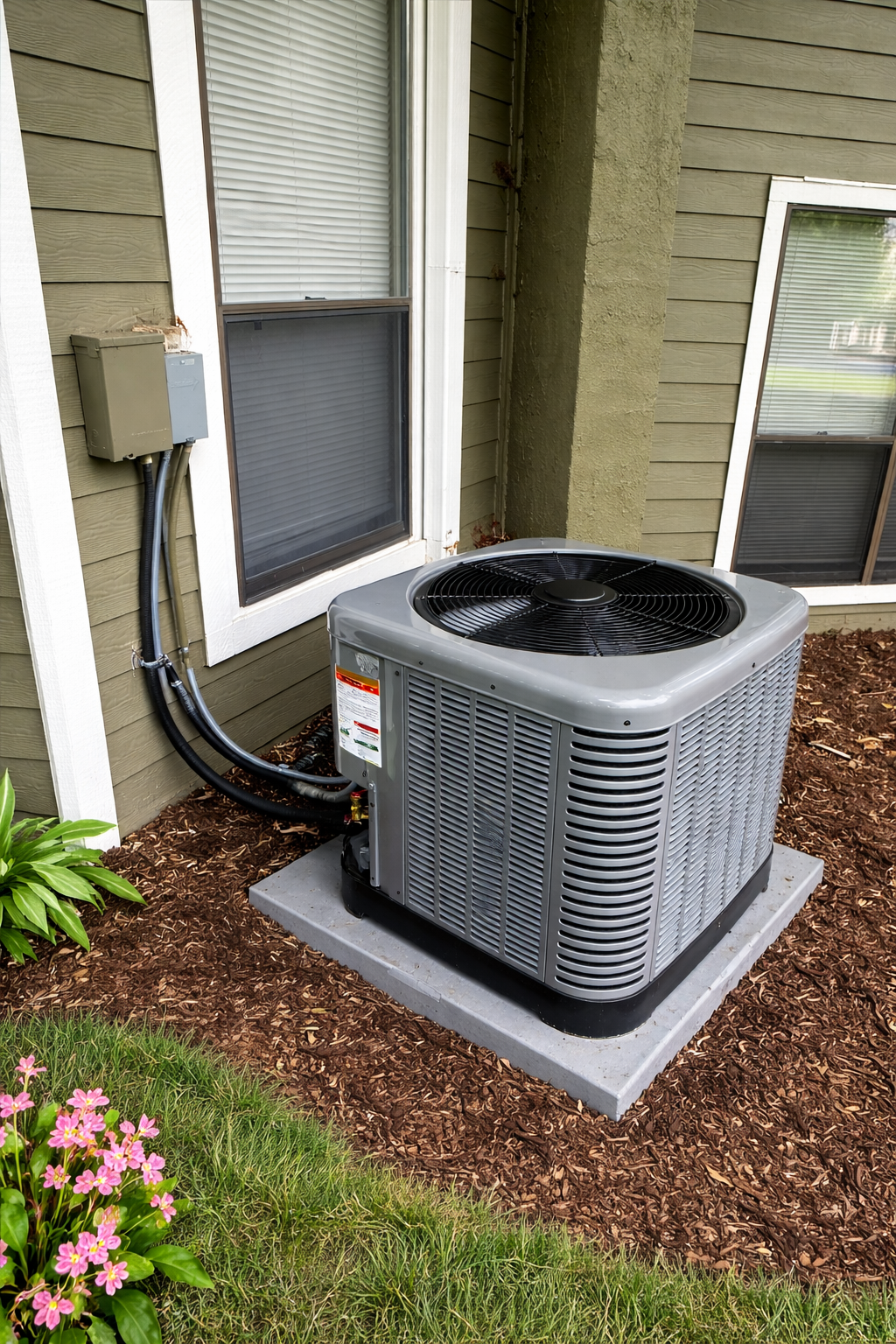
If your ac is making noise, you are probably wondering whether it is something minor or a bigger problem. In the homes we service across the Triangle, unusual sounds are one of the most common reasons people call us. A healthy air conditioner should run with a soft, steady hum. When that hum turns into buzzing, clicking, squealing, or rattling, your system is trying to tell you something.
Some noises point to a quick fix. Others signal a part that is wearing out and needs attention before it fails completely. Below, we break down the most common sounds our team hears on service calls, what usually causes each one, and when it makes sense to schedule a repair.
Buzzing: Often an Electrical or Debris Issue
A buzzing sound is one of the most frequent complaints we hear when a customer’s ac is making noise. It often comes from loose electrical connections, a failing contactor, or a capacitor that is starting to go bad. Buzzing can also mean something simple, like a stick, leaf, or small piece of debris caught in the outdoor fan blade.
We recommend turning the unit off and checking the outdoor cabinet for visible debris before calling for service. If the buzzing continues after you clear the area, the cause is likely electrical, and that is not something to leave unattended. Loose wiring or a struggling capacitor can lead to a full system failure if it is ignored for too long.
Clicking: Relays, Thermostats, or a Failing Capacitor
A single click at startup and shutdown is normal. That click is usually just the relay switching the system on or off. Repeated or rapid clicking is a different story, and it often points to a thermostat sending inconsistent signals or a capacitor that cannot hold a charge.
When a capacitor is failing, the compressor tries to start over and over, and each attempt produces another click. Left alone, this pattern puts extra strain on the compressor, which is one of the most expensive parts to replace. Catching a clicking ac making noise early usually means a simple part swap instead of a bigger repair down the road.
Squealing: Belt, Motor, or Blower Trouble
Squealing or high-pitched screeching almost always traces back to a motor bearing or a belt that has lost tension. Older systems with belt-driven blowers are especially prone to this. As the belt wears, it slips against the pulley and produces that sharp, uncomfortable sound every time the system cycles on.
Motor bearings can also dry out over time, causing metal-on-metal friction that grows louder the longer it runs. Neither issue resolves itself. The part will need lubrication, adjustment, or replacement, and waiting usually turns a small fix into a motor replacement.
Rattling: Loose Panels, Debris, or Fan Blade Issues
Rattling is often the easiest noise to diagnose. It usually means a panel, screw, or bracket has come loose on the outdoor unit and is vibrating against the cabinet during operation. Sometimes it is nothing more than acorns, twigs, or gravel that fell into the unit.
A bent or unbalanced fan blade can also cause rattling, along with a louder whirring noise as it spins. This kind of imbalance puts uneven stress on the motor shaft. A quick inspection usually identifies the source and prevents it from becoming a bigger repair.
Why Is My AC Making Noise Only When It Starts Up?
Startup noises are common because the compressor and fan motor experience the most strain the moment they kick on. A brief clunk or hum at startup is normal. If the noise is loud, repeats every cycle, or lasts longer than a few seconds, it usually means a part is struggling to engage and should be checked before it fails entirely.
Our team has seen just about every version of an ac making noise across Raleigh, Durham, and the surrounding Triangle counties since Riley O’Quinn founded Thermostat Masters in 2019. We hold NC HVAC contractor license L.37574 and keep our regular hours from 8am to 6pm, with 24/7 emergency texting available after hours for anything that cannot wait. Financing is available for qualifying customers, and we have earned more than 350+ five star Google reviews from families across the region. If your system is making a sound that concerns you, our AC repair page has more information on how we diagnose and fix common issues. For general background on how cooling systems work and how to keep them efficient, the U.S. Department of Energy offers helpful guidance on air conditioning basics.
Frequently Asked Questions
Is it safe to keep running my AC if it is making noise?
It depends on the sound. A light rattle from loose debris is usually safe to run for a short time. Buzzing, grinding, or repeated clicking means you should shut the system off and have it inspected, since continuing to run it can cause more damage to the compressor or motor.
Can I fix an AC making noise myself?
Clearing visible debris or tightening an obviously loose panel screw is something most homeowners can handle safely. Anything involving electrical components, refrigerant, or the compressor should be left to a licensed technician, since those repairs carry real safety risks.
Does a noisy AC always mean I need a new system?
Not usually. Most noise complaints trace back to a specific part, such as a capacitor, belt, or fan blade, rather than the entire system failing. A technician can typically diagnose the exact cause and recommend a targeted repair instead of a full replacement.
How quickly should I call someone about AC noise?
If the noise is new, loud, or getting worse, we recommend calling within a day or two. Small issues rarely stay small in HVAC systems, and addressing an ac making noise early almost always costs less time and hassle than waiting for a full breakdown.