
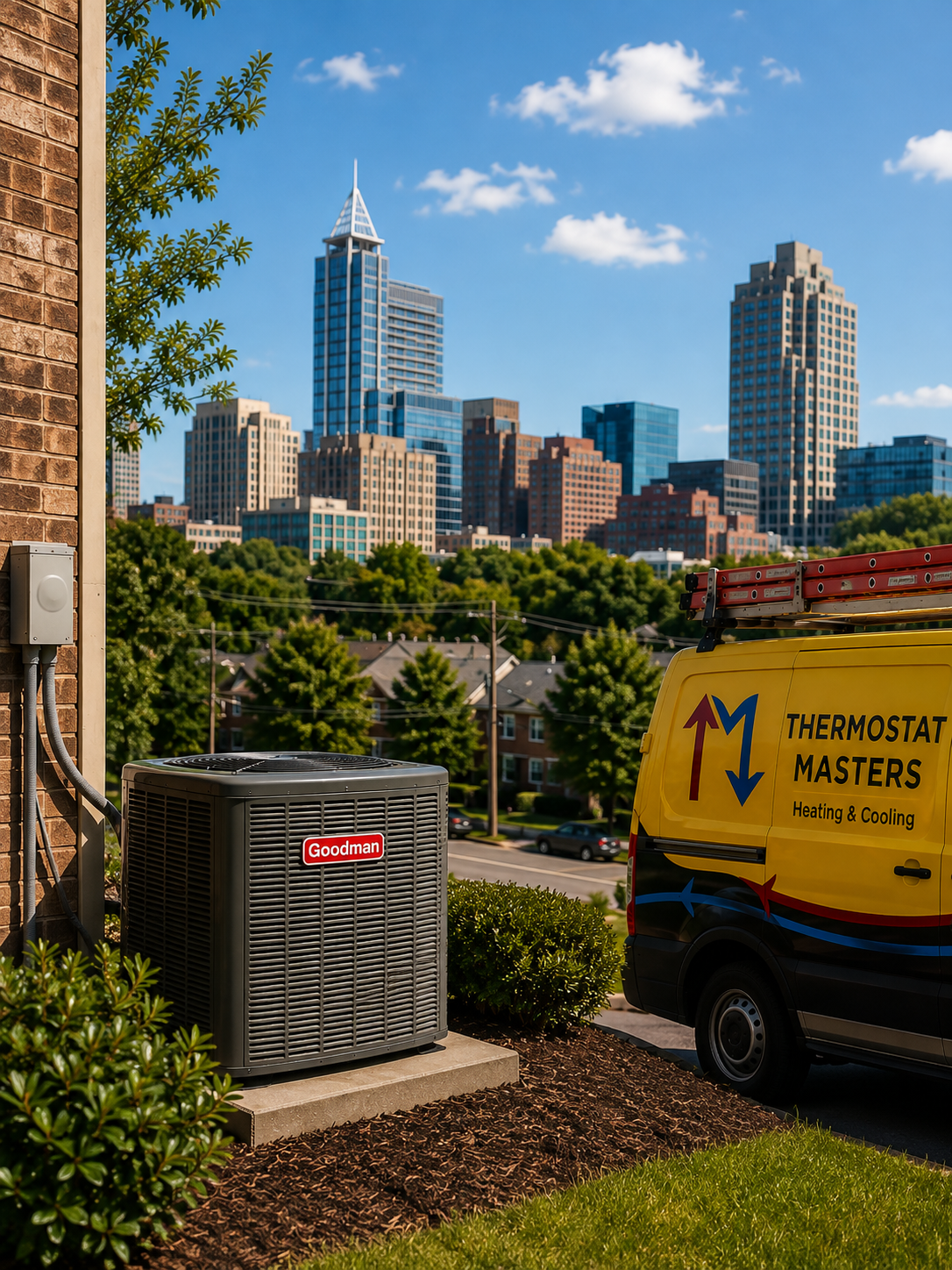
Choosing an HVAC contractor is one of those decisions homeowners rarely think about. Then the air handler quits on a July afternoon, or the furnace won’t fire up on the first cold night of the year. In the homes we service across the Triangle, we hear the same story again and again. Someone got burned by a low bid that ballooned once the work started, or a technician showed up without the right license or insurance. Now they are more cautious the second time around. This guide explains how to choose an HVAC contractor, so you can skip that bad experience and hire someone you trust.
We founded Thermostat Masters in 2019 out of Clayton, North Carolina. Since then we have grown through referrals and repeat customers rather than gimmicks. That means our reputation depends on doing the job right the first time. It does not matter if that is a routine tune up or a full system replacement. Here is what we tell friends and neighbors when they ask how to choose an HVAC contractor, not just us.
How to Choose an HVAC Contractor: Confirm License and Insurance First
North Carolina requires HVAC contractors to hold a license issued by the State Board of Examiners of Plumbing, Heating and Fire Sprinkler Contractors. This is not a formality. A licensed contractor has passed exams on code compliance, refrigerant handling, and safety practices. The license number gives you a way to verify the business is legitimate before you let anyone into your home. Our license number is L.37574, and we list it on our site and paperwork because homeowners have every right to check it.
Insurance matters just as much as licensing. Ask any contractor for proof of liability coverage and workers compensation. If a technician suffers an injury on your property, or a mistake damages your home, insurance protects you financially. A contractor who hesitates to answer this question, or cannot produce documentation, is telling you something important. It shows how they run their business.
Ask for a Written Estimate, Not a Number Over the Phone
A trustworthy contractor should be willing to look at your actual system, your ductwork, and your home. Only then will they give you a firm number. A written estimate protects both sides: you know what the estimate includes, and the contractor is not guessing at scope. Be wary of anyone who quotes a job sight unseen or pressures you to sign the same day. Good HVAC work is rarely an emergency decision, even when your system has failed. A company confident in its pricing will put that price in writing without a fight.
It is also fair to ask what the estimate covers: permits, disposal of the old unit, warranty terms, and financing options for qualifying customers. This matters most if you are facing a larger replacement. A contractor who walks you through those details patiently is usually the same contractor who communicates well once the work begins.
Look at Experience and Real Reviews, Not Just Star Ratings
Years in business tell you something, but so does the pattern in a company’s reviews. Read a handful of them closely rather than trusting the average score alone. Do customers mention the technician’s name? Do they describe specific problems and how we solved them, or just give a general “good experience”? Knowing how to choose an HVAC contractor often comes down to reading between the lines of these reviews. We have earned 350+ five star reviews on Google, and we are proudest of the consistency, not just the count. Customers often mention that a tech explained the problem before fixing it, or that we showed up when we said we would.
You can learn a lot about a company by reading its own story, too. Our about page lays out who we are and how the business started. It also covers what we believe about doing this work honestly in the communities we grew up in.
Pay Attention to How They Communicate, Before You Ever Sign Anything
The way a contractor answers the phone, returns a message, or explains a diagnosis tells you a lot. It hints at what it will be like to work with them once you are a customer. Do they answer your questions directly, or talk around them? Do they explain the tradeoffs between repairing and replacing a system, or push straight to the most expensive option? A contractor who takes time to answer even basic questions usually treats customers fairly down the line.
We built our own process around this idea. Our regular hours run 8am to 6pm. Because HVAC failures do not always wait for business hours, we also offer 24/7 emergency texting after 6pm. That way you are never stuck waiting until morning with no way to reach anyone. If you want to see how we handle intake and scheduling for yourself, our contact page is a good place to start.
Understand the Warranty, on Both the Equipment and the Labor
Most HVAC equipment comes with a manufacturer warranty, but that only covers parts, not the labor to diagnose and install them. Ask any contractor you are considering what their labor warranty covers and for how long. This distinction matters more than people realize. Months after an installation, a homeowner may be surprised to learn that the warranty covers a failed part but not the labor to replace it. A contractor who explains this upfront, in plain language, is not trying to hide the fine print until it becomes a problem.
It is also worth asking how a contractor handles warranty claims. Do you call the manufacturer directly, or does the contractor manage that process for you? The easier a company makes it to use a warranty when something goes wrong, the more it tells you about the relationship. That is especially true for how they treat you after you pay the invoice.
Choose Someone Who Actually Knows Your Part of North Carolina
Homes in this part of the state deal with humid summers, mild but unpredictable winters, and a wide range of housing stock. That stock ranges from newer builds in fast growing subdivisions to older farmhouses with ductwork patched together for decades. Understanding how to choose an HVAC contractor in your specific part of North Carolina matters as much as checking a company’s reviews. A contractor who works across this region regularly will recognize these patterns quickly instead of treating your home as a blank slate.
We serve homeowners across Raleigh, the greater Triangle, and Durham, along with Franklin, Harnett, Johnston, Orange, and Wake counties. You can see the specific communities we cover on our locations page. If you do not see your neighborhood listed, ask us directly rather than assuming a company will travel to you.
Frequently Asked Questions
How do I verify an HVAC contractor’s license in North Carolina?
You can look up any contractor’s license through the North Carolina State Board of Examiners of Plumbing, Heating and Fire Sprinkler Contractors. A legitimate contractor will not hesitate to give you their license number so you can check it yourself.
Should I get more than one estimate before hiring an HVAC contractor?
It is generally a good idea, especially for larger jobs like a full system replacement. Comparing written estimates side by side helps you see what each estimate includes, how warranty terms differ, and whether one company’s scope of work is more thorough than another’s.
What is the difference between an equipment warranty and a labor warranty?
An equipment warranty, usually from the manufacturer, covers the cost of replacement parts if they fail. A labor warranty, which the contractor offers, covers the cost of the technician’s time to diagnose and install those parts. Always ask about both before agreeing to a job.
What should I do if my HVAC system fails outside of normal business hours?
Look for a contractor who offers a clear after hours process rather than an answering machine. We keep regular hours of 8am to 6pm and offer 24/7 emergency texting after 6pm. That gives homeowners across the Triangle a direct way to reach us when something breaks at an inconvenient time.