
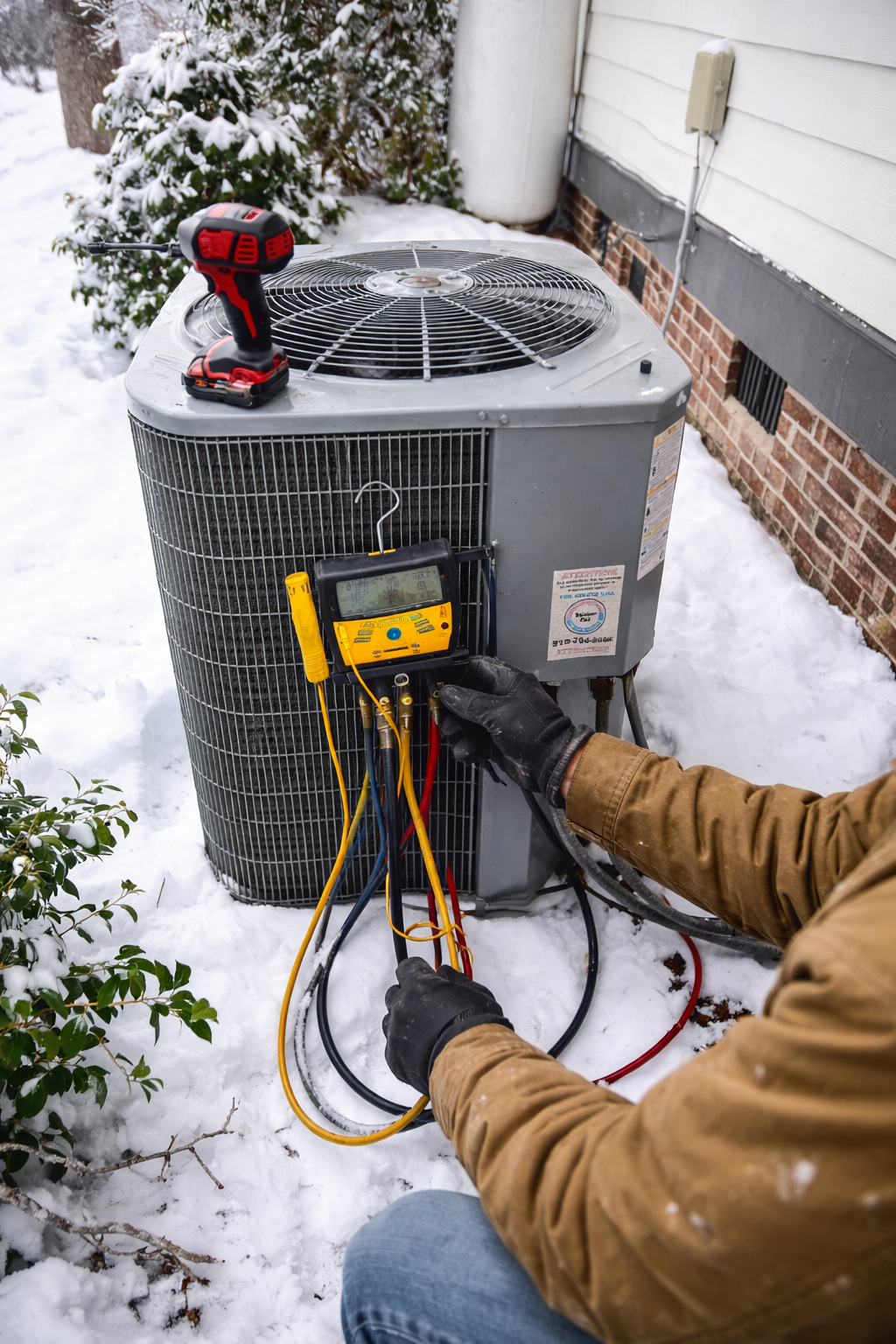
Most heating and cooling systems need professional service twice a year — once in spring before the AC starts working hard, and once in fall before the heat comes on. In North Carolina that rhythm matters more than it does in milder climates, because the same system often runs in some form nearly year-round.
Below is what that schedule actually looks like, what a technician checks during a visit, and the signs your system is overdue.
The Short Answer: Twice a Year
Two visits a year is the standard for a home with separate heating and cooling equipment: a cooling tune-up in spring and a heating tune-up in fall. Each visit targets the system that’s about to carry the load, which is the point — you want problems found before the equipment is under stress, not during the first 95-degree week.
Why Twice a Year Makes Sense Here
Raleigh and the Triangle get long, humid summers and winters that swing between mild and genuinely cold. That combination means neither side of your system gets a real off-season. Humidity also puts extra work on the cooling side, since the system is pulling moisture out of the air on top of lowering the temperature. Equipment that runs that much benefits from being checked more often, not less.
What Happens During a Tune-Up
A seasonal visit is mostly inspection and adjustment rather than repair. A technician will typically check refrigerant levels, test electrical connections and capacitors, clean or inspect the coils, check the condensate drain, verify airflow and filter condition, and confirm the thermostat is calling for and reaching the right temperatures. Small things get corrected on the spot — a loose connection tightened, a drain cleared — before they become the reason your system quits.
If You Have a Heat Pump, Read This Part
Heat pumps are a different case. Because a heat pump handles both heating and cooling, it runs far more hours per year than a furnace-and-AC pair does. Twice a year is the floor for a heat pump, not a generous schedule. If yours is more than about ten years old or you’ve noticed it running longer than it used to, it’s worth talking with a technician about whether heat pump service should happen on a tighter cycle.
Signs Your System Is Overdue
You don’t have to wait for the calendar. Weak airflow, rooms that never quite match the thermostat, new noises, a musty smell when the system kicks on, or a utility bill that climbed without a change in habits are all reasons to schedule sooner. Any of those can also be the early stage of a problem that HVAC repair would otherwise catch later, and more expensively.
Is a Maintenance Plan Worth It?
For most homeowners the honest answer is that a plan is useful mainly because it removes the remembering. Seasonal visits get scheduled automatically instead of slipping until something breaks. Our HVAC maintenance plan is built around that twice-a-year cadence, with tune-ups timed to the seasons rather than to whenever someone thinks of it.
Frequently Asked Questions
Can I skip a year if the system seems fine?
You can, and plenty of people do. The tradeoff is that most of what a tune-up catches is invisible until it isn’t — a capacitor that’s drifting, a drain starting to clog, refrigerant slightly low. Those rarely announce themselves until the system stops.
How often should I change the filter between visits?
That depends on the filter and the household. A standard one-inch filter usually needs changing every one to three months, sooner with pets or a lot of dust. Thicker media filters last longer. If you’re not sure, check it monthly for a season and you’ll learn your own interval.
Is fall or spring more important if I only do one?
Do the one that comes before your heaviest season. In this area that’s usually spring, since cooling runs longer and harder than heating. But a single annual visit means the other system goes unchecked for two years at a stretch, which is how surprises happen.
Does maintenance actually extend equipment life?
Regular service helps equipment run under less strain, which generally supports a longer service life — but no one can promise a specific number of years. What a tune-up reliably does is catch small problems while they’re still small.
Schedule Your Next Tune-Up
If it’s been more than a year since anyone looked at your system, fall is a good time to get back on schedule before heating season starts. Get in touch and we’ll set up a visit and tell you honestly what we find.