
Commercial HVAC usually needs service two to four times a year — more often than a home system, and for a straightforward reason: commercial equipment runs longer hours, moves more air, and sits in harsher conditions. A rooftop unit baking through a Raleigh summer is not doing the same job as the system in your house.
Here’s how to figure out the right interval for your building, what a service visit should cover, and what it actually costs you when maintenance slips.
The Short Answer: Two to Four Times a Year
Twice a year is the minimum for most light commercial spaces — offices, small retail, professional suites. Four times a year, roughly quarterly, is more appropriate for buildings that run extended hours, spaces with heavy occupancy, or equipment that’s already past the midpoint of its expected life. Restaurants, medical offices, and anything with specialized ventilation often sit at the higher end.
What Actually Drives the Frequency
A few factors move the number. Operating hours matter most — a system running sixteen hours a day accumulates wear roughly twice as fast as one running eight. Occupancy and air quality requirements matter, since more people means more filter loading. Equipment age matters, because older systems fail in more ways. And the physical environment matters: rooftop units, kitchen exhaust proximity, and dusty or industrial settings all shorten the interval.
What a Commercial Service Visit Should Cover
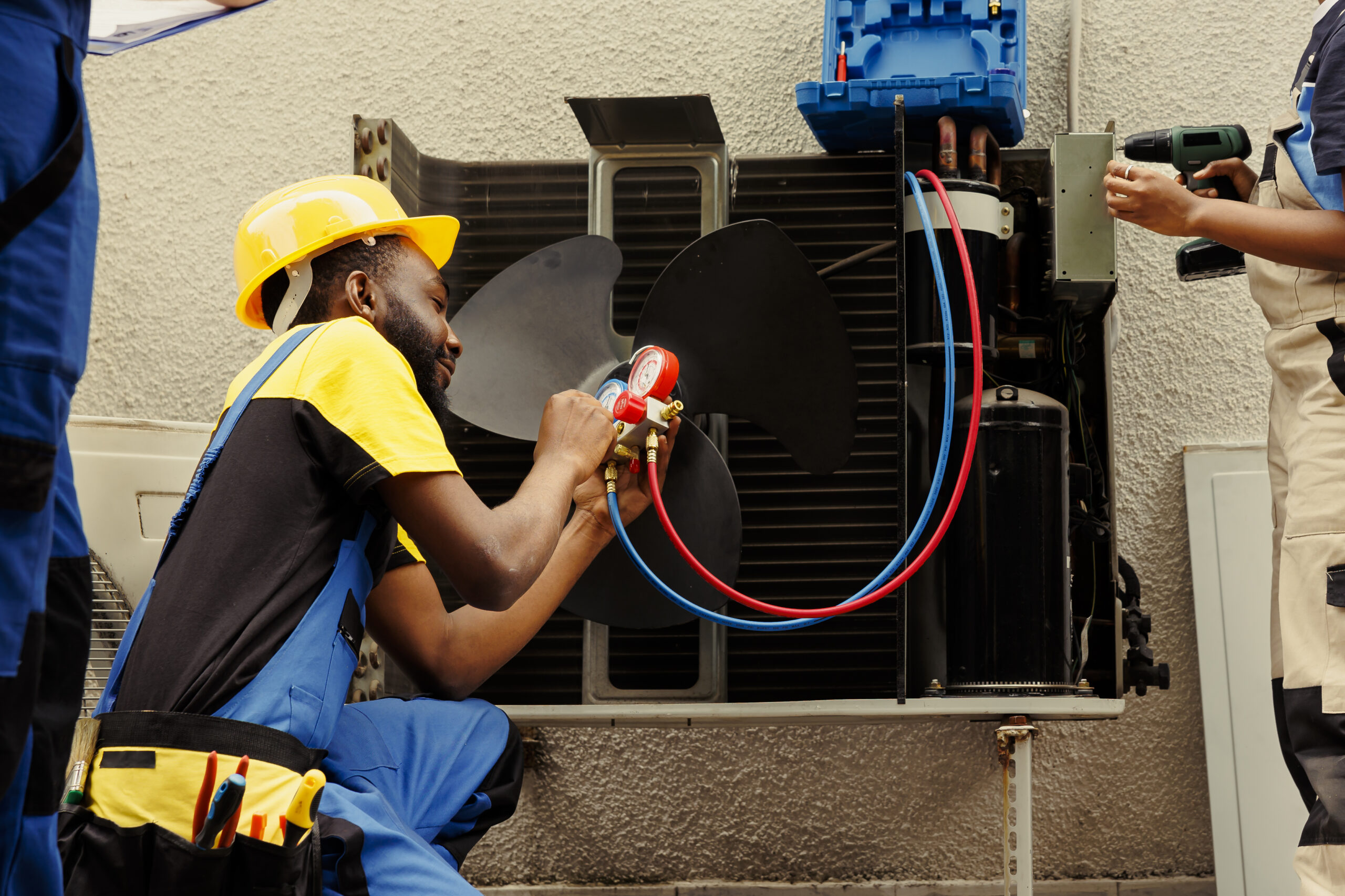
A proper visit goes well past a filter change. Expect coil cleaning, belt and bearing inspection, electrical connection and contactor checks, refrigerant level verification, condensate drain clearing, economizer and damper operation, thermostat and control checks, and airflow measurement. On multi-unit buildings, each unit needs its own attention rather than a spot check on one and an assumption about the rest.
Rooftop Units Need Extra Attention
Rooftop units take the worst of it — direct sun, wind-driven debris, standing water, temperature swings, and no shelter at all. They’re also the easiest equipment to forget, because nobody walks past them. Debris around the coils and blocked drains are two of the most common findings on a first visit to a neglected roof, and both are cheap to fix and expensive to ignore. Our commercial HVAC services cover rooftop equipment specifically.
The Real Cost of Skipping Maintenance
The expense of deferred maintenance rarely shows up as a maintenance line item. It shows up as an emergency call during business hours, a closed dining room in August, a server room running hot, or tenants complaining to a property manager. Unscheduled failures also tend to happen at the worst possible time, because that’s when the equipment is under the most load. If something has already failed, HVAC repair is the immediate need — but the pattern is what maintenance addresses.
Building a Schedule That Fits Your Operation
The useful version of a maintenance schedule accounts for your actual business — service before your busy season rather than during it, visits timed outside operating hours where possible, and a written record of what was found on each unit so patterns become visible over time. Our commercial maintenance program is built around scheduled visits rather than reactive calls, which is the whole point.
Frequently Asked Questions
How many visits does a small office really need?
For a standard office running business hours, two visits a year — one before cooling season, one before heating — is usually adequate. If you have more than a few rooftop units or the equipment is over ten years old, moving to quarterly is worth considering.
Can our building maintenance staff handle this instead?
In-house staff can absolutely handle filter changes and visual checks between visits, and that helps. Refrigerant work, electrical diagnostics, and combustion checks require licensed technicians and proper instruments.
What’s the difference between maintenance and an inspection?
An inspection tells you the condition of the equipment. Maintenance includes the corrective work — cleaning, adjusting, tightening, replacing wear items. A visit that only reports findings without addressing them isn’t really maintenance.
Should each rooftop unit be serviced on the same schedule?
Not necessarily. Units serving different zones often run very different hours. A unit over a kitchen or a south-facing space may need attention more frequently than one serving a lightly used area.
Set Up a Service Schedule
If your commercial equipment is on an informal schedule — or no schedule — a walkthrough is the place to start. Get in touch and we’ll look at what you have, tell you the condition it’s in, and put together an interval that matches how your building actually runs.