
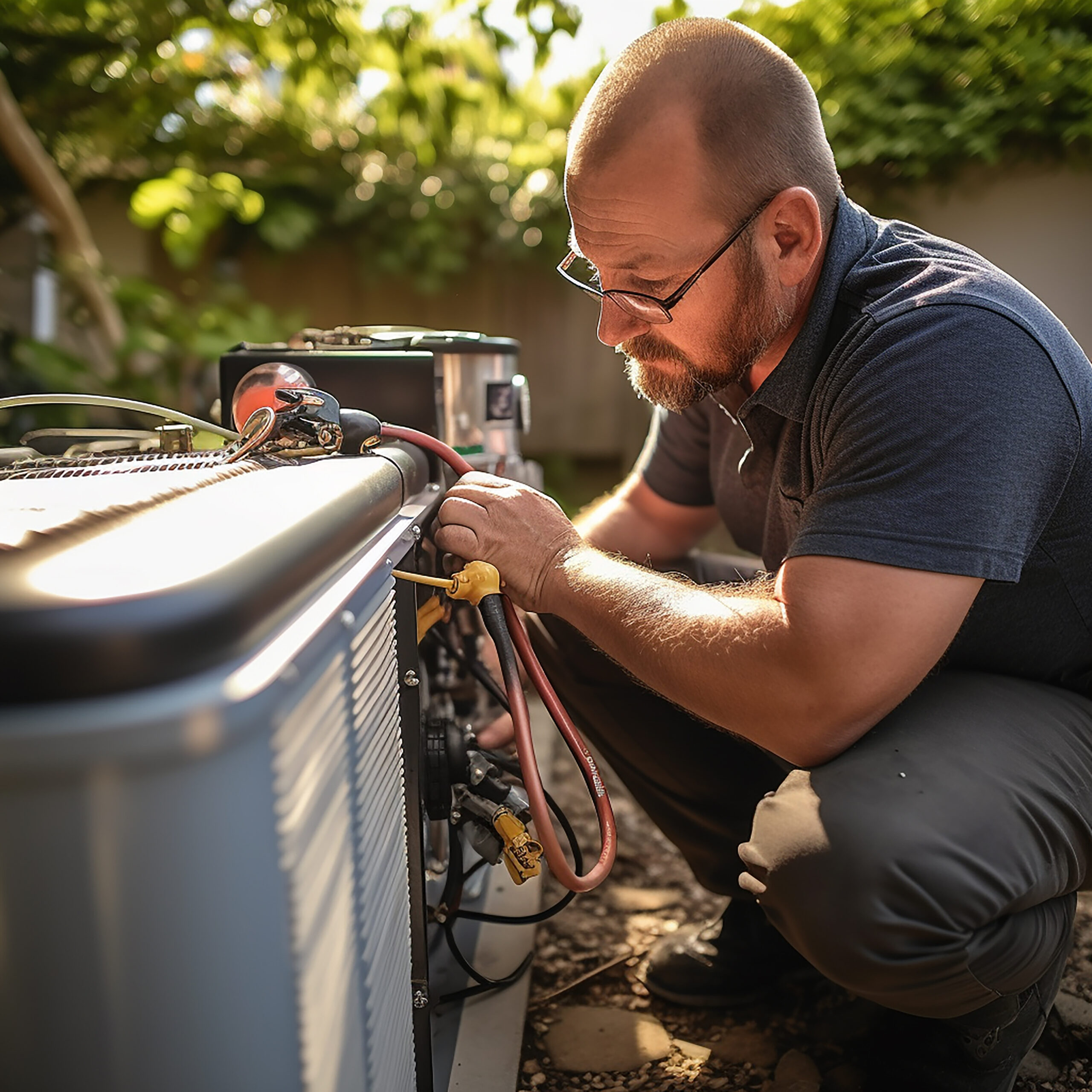
By late July, our techs have usually seen every way an air conditioner can fail. In the homes we service across the Triangle, we watch the same systems run nearly nonstop from May through September, and that kind of workload exposes weak points fast. If your AC has quit on you, or you just want to understand the common causes of AC failure before they happen, here is what we actually find when we open up a failing unit in Raleigh, Durham, or anywhere else in the Triangle.
Understanding the causes of AC failure is the first step toward avoiding an emergency call. Some of these problems build slowly and give warning signs along the way. Others show up without notice, usually on the hottest day of the year. Either way, knowing what to watch for can save you a stressful afternoon and a lot of discomfort.
Refrigerant Leaks
Refrigerant is what actually moves heat out of your home, and a properly charged system should never need a “top off.” If your AC is low on refrigerant, that means there is a leak somewhere in the line set, coil, or connections. A slow leak often shows up as a system that runs longer than it used to, blows air that is not quite cold enough, or forms ice on the copper lines. We see this often in homes with older systems where connections have corroded over time, especially in our humid climate. Leaks do not fix themselves, and simply adding refrigerant without finding and sealing the leak is a short-term patch that leads to a repeat visit within a season.
Dirty Filters and Clogged Coils: One of the Most Common Causes of AC Failure
This is the most common cause we find, and it is also the most preventable. A dirty air filter restricts airflow through the system, which forces the evaporator coil to run colder than it should. That coil can ice over, and once it does, cooling stops until the ice melts. Outdoor condenser coils have the opposite problem: pollen, grass clippings, cottonwood fluff, and general yard debris build up on the fins and block the system from releasing heat outside. In the Triangle, our heavy spring pollen season and dense tree cover mean outdoor coils get dirty faster than in drier climates. Checking and changing filters monthly during peak season, and keeping at least two feet of clearance around the outdoor unit, prevents a surprising number of service calls.
Electrical and Capacitor Failures
Capacitors give the compressor and fan motors the jolt of energy they need to start and keep running. They are one of the most frequent failure points we see, particularly on units that run for hours at a stretch during a Raleigh summer heat wave. Heat and constant cycling wear capacitors down over years of use, and when one fails, the outdoor unit may hum without starting, or not respond at all. Contactors, another common part, can pit and stick from repeated electrical arcing, sometimes causing a unit to run continuously even when the thermostat is satisfied. Both are relatively affordable, quick fixes when caught early, but ignoring early symptoms like humming, clicking, or a slow-to-start compressor can lead to a burned-out motor, which is a far bigger repair.
Condensate Drain Line Clogs
Our humidity means your AC is pulling a lot of moisture out of the air, and all of that water has to go somewhere. It travels through a condensate drain line, and over time algae, dust, and debris build up inside that line and cause a clog. Once the line backs up, many systems shut themselves off automatically through a safety switch to prevent water damage, which can look like a total failure even though the equipment itself is fine. In other cases, a clogged line leads to water pooling near the indoor unit or dripping through a ceiling if the system is in an attic. This is one of the more common warm-weather calls we get in the Triangle, precisely because our summers are so humid.
Thermostat and Control Issues
Sometimes the outdoor unit and indoor coil are working just fine, and the problem is the thermostat itself. Wiring issues, dead batteries, outdated firmware on smart thermostats, or a miscalibrated sensor can all cause a system to run at the wrong times, short cycle, or not respond to commands at all. We also see this with older mechanical thermostats that simply wear out after years of use. Before assuming the worst about your equipment, it is worth checking that the thermostat has power, is set correctly, and is communicating with the system. It is a simple thing to rule out and occasionally solves what looked like a major problem.
Age, Wear, and Other Common Causes of AC Failure
Most residential AC systems are built to last somewhere around fifteen years, but that lifespan assumes reasonable maintenance and a normal workload. In the homes we service across the Triangle, systems often run far more hours per year than the national average because our cooling season stretches from April into October. That extra runtime accelerates wear on compressors, motors, and bearings. A system that has never had a professional tune-up is more likely to be running with a dirty coil, low refrigerant, or a struggling capacitor without anyone knowing it, all at the same time.
Regular maintenance catches these issues individually, before they combine into a full breakdown on the hottest day of the year. The ENERGY STAR program also recommends annual tune-ups to prevent the most common causes of AC failure. It also matters for warranty coverage, since many manufacturers require documented annual service.
Whatever the causes of AC failure turn out to be in your home, our team can diagnose the issue and walk you through your options honestly. We hold NC HVAC contractor license L.37574 and serve homeowners throughout Raleigh, the greater Triangle, Durham, Franklin, Harnett, Johnston, Orange, and Wake counties. Our regular hours run 8am to 6pm, and we offer 24/7 emergency texting after 6pm for anyone who cannot wait until morning. Visit our AC repair page to learn more about how we diagnose and fix these issues, or contact us to schedule a visit.
Frequently Asked Questions
What is the most common reason an AC stops working in the summer?
In our experience, dirty filters and clogged outdoor coils are among the most frequent causes of AC failure during peak summer months in the Triangle. Restricted airflow makes the system work harder and can lead to icing, reduced cooling, or a full shutdown. Regular filter changes and keeping the outdoor unit clear of debris go a long way toward preventing this.
Why does my AC only blow warm air?
Warm air can point to several different issues, including low refrigerant from a leak, a failing compressor, a tripped breaker, or a thermostat that is not communicating with the system properly. Because the cause varies, it is worth having a technician diagnose the specific issue rather than guessing, since some of these problems can worsen if the system keeps running.
Can heavy summer use actually shorten the life of my AC?
Yes. Systems in our region often run many more hours per year than units in milder climates because our cooling season is long and humidity keeps equipment working hard even on moderate days. That extra runtime adds wear to compressors, motors, and other moving parts over time, which is part of why consistent maintenance matters so much here.
How often should I have my AC professionally serviced?
We generally recommend at least one professional visit per year, ideally in spring before the heaviest cooling months begin. Given how hard systems run across the Triangle, some homeowners choose a maintenance plan that includes a fall check as well, which helps catch small issues before they turn into a breakdown.